
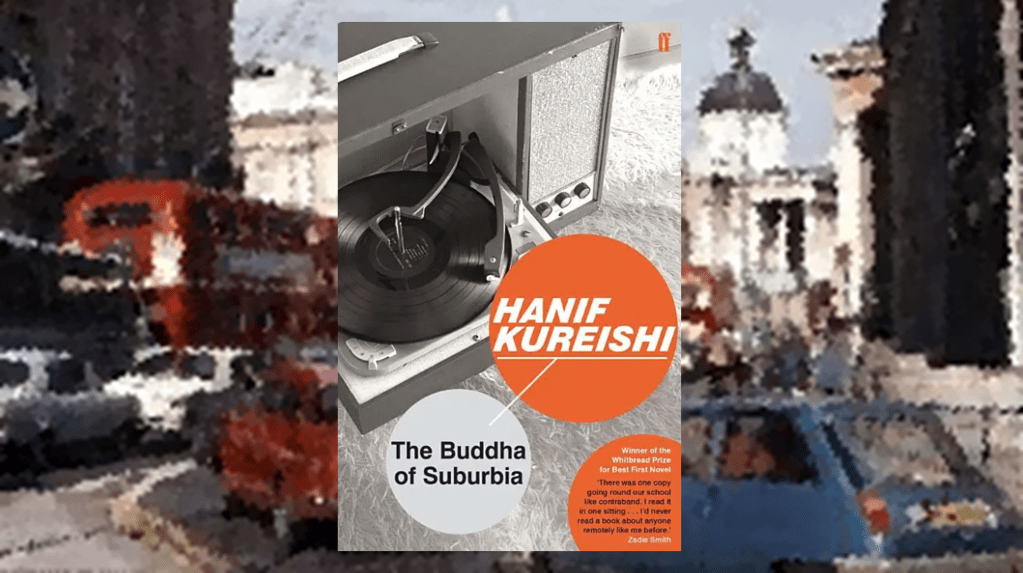
The Buddha of Suburbia tells the coming of age story of Karim, a second generation Indian migrant in 1970s England. However, oddly, the main character Karim never seems to need growing up but rather he presents as a fully formed observer making sense of the world rather than himself.
Like many second generation migrants, Karim encounters racism and struggles to find his place in England, however, unlike many migrant stories I have read, Karim’s criticisms are directed in all directions of his life. Karim is critical of mainstream England, but also towards his own culture, his own family, and his closest friends.
Kureishi builds a world full of hypocrisy that Karim must try to make sense of. Many characters experience personal struggles which Kureishi cleverly ensures will flow onto impact those around them. Karim’s father absconds his traditional family responsibilities, ironically in a way to explore and develop his own culture. Karim’s English step-mother (kind of) and her son insatiably chase class ascension, similarly to how the other migrants in Karim’s circle might. Karim’s nearest family also struggle with cultural pressures but in their case are unable to maintain cultural reservation in a country which is forcing them to change.
All the while Karim watches, sometimes with disgust, and makes sense of this along his own journey which ultimately leads him to acting in the second part of the book. The two part split in the book is stark, whereas the first part explores the depths of struggles in suburbia, the second part shows that the is ugliness present in higher society too. Karim and his step-brother Charlie ultimately find that even their eventual successes can’t rid them of their loneliness nor their insecurities regarding their place in the world.
The 1970’s setting makes of this chaos even more impactful. No phones and no social media make each local gig, community play and family dinner feel like an event for Karim. Each person with new hair or makeup presents genuinely new ideas for him to reconcile and explore. However each step comes with a similarly unknowable risk. When Charlie winds up with a group of punks the reader can’t tell if his story will end in a ditch after a bender. When Karim leaves schools the reader doesn’t know if he will even leave the suburbs. Each step is taken by the characters in darkness without the faux illusion of certainty the internet would have brought them if making those choices today.
The Buddha of Suburbia was a great exploration of social class, multiculturalism and it’s impacts on different generations. Karim is a cocky, curious and fearless character well taking the time to read about.
 ehhere
Leave a comment