
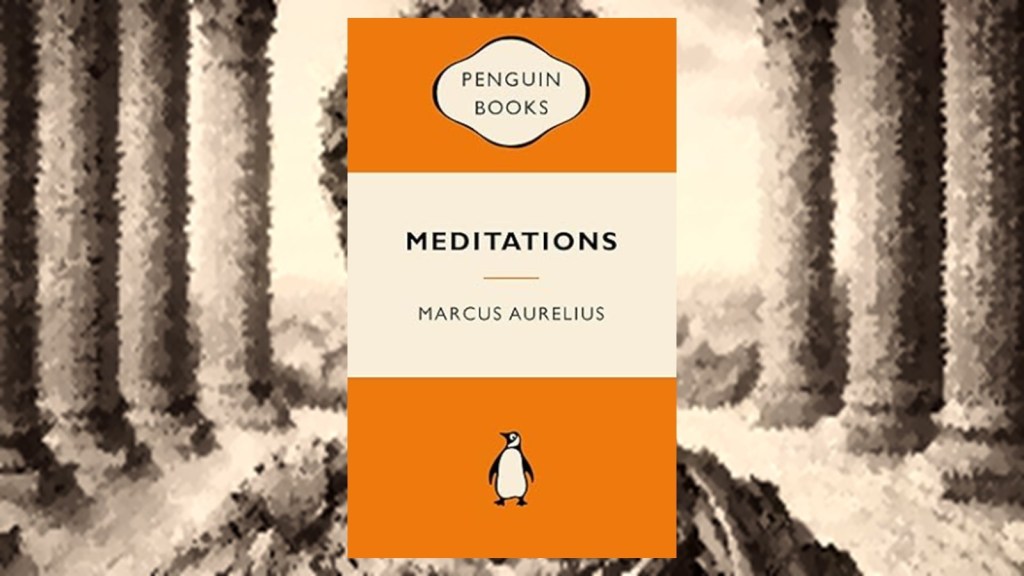
Meditations turned out to be a wonderful read, full of insightful philosophical thoughts, most of which were still as relevant today as when they were originally written almost 2000 years ago.
The book is a translation of the writings of Marcus Aurelius, a Roman Emperor. Originally written in Greek, the writings were preserved and handed down the generations through roman aristocracy, eventually protected by the Eastern Roman Empire and transported back to the west with the fall of Constantinople. During the renaissance triggered by this event, Meditations found a new wealthy audience, and has since remained a classic text.
The core text itself is relatively short, so the modern editions of the book are padded with a detailed introduction and notes. Although the introduction was useful to understand the historical context, I found the passaged which interpreted the core text largely unhelpful. In hindsight the introductions may be more useful after reading the core text, as they often require an existing familiarity with its passages and tone.
Once I reached the core text, I found myself flicking to the notes at the back in an effort to avoid missing anything important. However, not only was this approach frustrating, but it was not really that helpful. The notes often just provide historical context or point to gaps in modern knowledge, this means the notes don’t really add much to the overall message of the core text. Eventually I just avoided the notes entirely which improved my enjoyment of the book.
The core text is arranged in 12 books. Each book is comprised of a number of short paragraphs, which each present a single idea. It’s written almost like a diary – or better yet – a personal twitter feed where Aurelius catalogues his thoughts about philosophy and life.
He covers a number of topics which have understandably been generalized as an exploration of stoicism. What stuck out for me was the relationship with death, the nature of the universe and the understanding of God. Aurelius ponders how to work through life’s challenges and what it all means with, I think, a relatively positive outlook that emphases the power of being kind, present and that we all in fact have a greater power to draw on.
I loved the ideas regarding the universe’s pervasiveness and how everything is connected. When applied to the self, it suggested that we are both of the universe, and made up of it. Aurelius expands on this ideas in his writing about death, noting really disappear but is in fact recycled. One area that isn’t explicitly explored though is Aurelius’ ideas about consciousness, however I believe the most important message in this book is in relation to consciousness and free will. Specifically that we have the power to make choices, and those choices can make the world a better place. Again expanding on this, due to the universe’s connectedness, those choices have far reaching consequences beyond our comprehension.
I’ll definitely be reading this again, but perhaps with a view to mark my favourite passages this time!
 ehhere
Leave a comment