
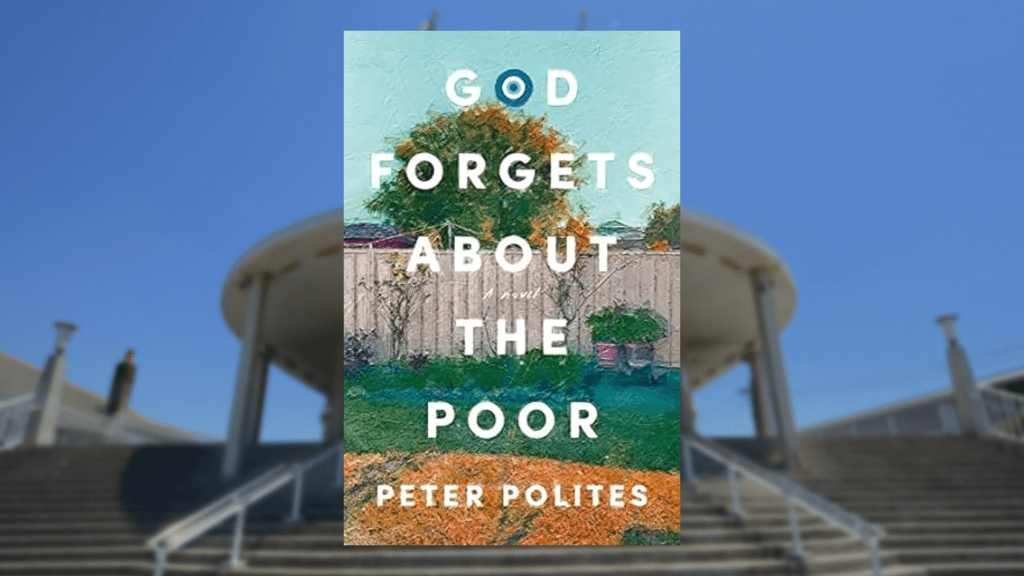
‘God Forgets About the Poor’ first came to my attention after seeing a review in the Neos Kosmos. I enjoy Greek literature, particularly Greek-Australian literature and after reading ‘Lucky’s’ by Andrew Pippos was keen to get into a similarly frank migrant story. Unfortunately when the book resurfaced again to me I was personally disappointed that it hadn’t enjoyed as much cut through. I was browsing though a city bookshop during my lunch break when I asked the attendant if they’d recommend it. My question was returned with a shrug “I haven’t read it, don’t know any customers who have, but it’s been reviewed well”. Well, that was enough for me to walk out of the shop with a copy under my arm.
‘God Forgets About the Poor’ made a strong first impression on me, but not necessarily a good one. The story opens with a long meandering first person account of the protagonists’ own migration story. The bitter tone and exclusive use of abstract character names does not make for easy reading. However, one I had accustomed myself to this rhythm, and braced myself for an onslaught of negativity, I came around to actually enjoying this opening. Upon reflection, the opening also served as a great primer for the rest of the book helping to contextualise stories that jumped across characters and time periods.
‘God Forgets About the Poor’ ultimately tells the Australian migration story of a Greek woman, and flow on effects of her journey to those around her. Each section takes the perspective of a different character in a different era, which overall provides an amazingly impactful insight into the Greek-Australian migrant experience.
The use of multiple character perspectives in particular does a great job in exploring the intergenerational impacts of migration. Whereas most migrant stories start and stop at the first generation, Polties uses the stories of the protagonist’s kids to explore the intersections of queer identity, inter-racial marriage, education and community alongside migrant identity.
The variety of time periods and settings also allows Polites’ immersive writing style to shine. Polites’ attention to cultural details bring locations to life, particularly his description of village life which provides a cohesive picture of food, religious culture, and even social hierarchy. Polites also successfully layers cultural and historical commentary in each of the settings. By weaving in stories of Anatolian migration and even civil war commenaty, Polites side steps stereotypical descriptions of village life and presents a more globally contextualised, smarter and more human image.
Similarly in his descriptions of the Belmore Greek community Polites is able to parallel the modern Sydney life with traditional village life, revealing there is more in common then we think, for better and worse. This helps contextualise the journey of the protagonist’s daughter’s as a migration experience in itself and brings into question the idea that migration assures a family of stability and refuge.
‘God Forgets About the Poor’ was an enjoyable read for its immersive world building, insightful character contrasts and cultural commentary. Although the writing had the tendency to frustrate me and at times lose its way within chapters, particularly in the current day chapters written towards the end, the book was enjoyable and perhaps even worth a re-read one day!


 ehhere
Leave a comment