
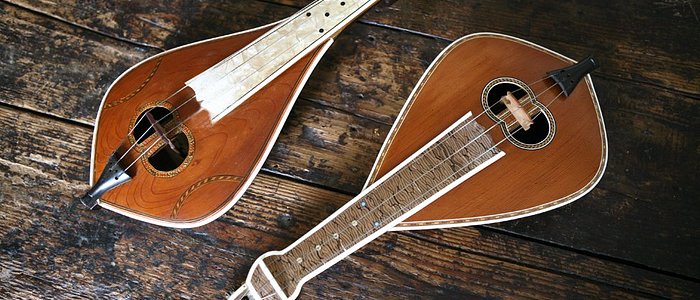
Cretans in the diaspora are faced with many challenges when trying to learn Lyra. This especially applied to 3rd generation Cretans in non-European countries. They often struggle with:
- No teachers available in the community,
- Struggles with Greek language barriers for online resources, and
- Extreme difficulty getting their hands on a Lyra at all!
These are some of the struggles I have faced here in Australia but I have learnt in my experiences that these struggles can be overcome. Below is my story of how I am learning Lyra in Australia, as well as some of the lessons I have learnt along the way. I hope that by chronicling my experiences I can help others who find themselves facing similar difficulties.
Why I am learning Lyra
I’m a third generation Cretan with a family that is active in the local Cretan community. My body is fuelled by καλτσούνια and my first steps were a Χανιώτικο Συρτό. My connection and appreciation for Cretan culture runs deep, but so does my desire to preserve it here in Australia. This is ultimately why I’m learning lyra, not just because I love its music, but because I want to help share this craft for future generations.
It is very important to understand why you want to learn Lyra as it will help guide where you focus your energy. If you want to perform one day, you may have to spend more time finding people to play with. If you want to express yourself, you may have to spend more time listening to different kinds of music. Although your reason for leaning may change over time, remembering your reason for learning can help you get through tough times and long practice sessions! Ask yourself, why do you want to learn Lyra?
How I set goals for playing Lyra
Early on, I only ever saw the Lyra on stage, and only ever played with it as a toy. It was fun but I never had any desire to pursue the craft because performing seemed too far out of my grasp. However once a year I would play Baklama for the Κάλαντα with other members of the Cretan community, some of which used to bring their Lyra along. This was the first time I realised you didn’t need to perform with the Lyra on a stage. Over time I saw the Lyra at dance practices, restaurant performances, and BBQ jams and I realised there was more value to learning Lyra than simply playing on stage. This helped form my earliest Lyra goals, which were small, I just wanted to learn the Kalanda and bring a little joy to the oldies. Over time though these goals changed and grew.
It’s important to visualise your goals clearly as it helps motivate you and focus your practice. The more exposure you get to Lyra the more you will be able to visualise different goals so watch videos, go to gigs and engage with music! Your goals will change as you grow and they can change in unexpected ways. There are no limits to this, so allow your imagination to run wild and see what excites you! Maybe that’s traditional music, performing in Crete, playing in a non-Greek band or even singing English μαντινάδες! Visualise your goals and ask, what excites you?
How I got a Lyra in the diaspora
My experience was a little backwards. My Dad randomly returned from a Greek holiday carrying a lyra thinking it would look nice on a wall. What it actually did was give my brother and I a chance to play on it in our spare time for fun. Access to a Lyra helped grow a desire to play it, but I have worked through many solutions to help people with the passion get their hands on one to. In my time I’ve bought a second hand one from within the community, I’ve borrowed one from a friend, and I even bought a mandolin to help compliment my practice as it plays a similar role to the Lyra in Cretan music.
If you are not lucky enough to be able to buy a Lyra from Greece or from a local music shop you still have options:
- Ask around your local Cretan community to see if you can borrow someone’s Lyra or buy one second hand, you ‘ll be surprised how many are actually around!
- If you are desperate for a Lyra you can buy one online, consider though that each Lyra is unique. Buying one online means you don’t have the chance to test it before you buy it.
- Consider buying a violin or a mandolin instead. These instruments plays the same role as the Lyra in Cretan music and are tuned the same as a Lyra, except that they have an extra string. This means you can learn songs on these instruments and more easily transfer that knowledge to the Lyra when you get one. Violins and Mandolins also have the added benefits of being more available and having more English language resources online.
- Consider learning lyra melodies on other instruments. This is a more unorthodox approach however you can still learn the Lyra role of music (playing the lead melody) or a Lute, Guitar or any other instrument!
Per above, even without access to a Lyra, there are many ways you can build knowledge of the Lyra and Cretan music. You can still practice and preserve Cretan tradition but it might take some more out of the box thinking!
How I started playing Lyra
Initially my brother was actually learning from one of our dance teachers. These unstructured sessions helped teach him a few melodies and the basic techniques. From here, the knowledge was socialised within our friendship group as just a bit of fun. Groups of us would play simple arrangements together before our Cretan dance classes with the Lyra and a Guitar. This music practice was as much a social experience as a musical one which encouraged me and others to pick up the basics. These were my first experiences playing lyra and learning its basic techniques, when mucking around with friends.
The Lyra’s tricky playing technique can pose a barrier to playing it. It’s hard to find videos with clear information and harder to know you are playing the instrument correctly. As a starting point it’s worth seeing if you can find a teacher, or even just someone in your community who knows how to play so that they can show you the basics. Cretan musical tradition has been passed down orally and socially so if possible, try learn with someone else and maintain this tradition of sharing. If you can’t find anyone though try to find beginner videos online and listen to a lot Cretan music with a focus on how the Lyra should sound, and visually how its musicians look when playing it. As you become more attentive to these things it will actually help guide you when you play with your lyra. Have fun, experiment, and try replicate what you see and hear! Remember though even though you may not be able to find someone to teach you, can you be the example or learning partner for someone else! Share your early experiments with others and together you can work it out. Don’t be scared to practice at dance classes, around family or friends, someone else may join you on the journey.
Why I started by practicing technique
A few years later after those early music sessions fizzled out I found myself home alone while my family holidayed in Greece. Over this period I decided to apply myself to practicing lyra every day. The early practice sessions of learning Lyra (similar to violin) can sound really bad, so having the house to myself and not annoying anyone allowed me to practice freely. I had a very simple goal, which was to learn how to play clean notes. Every day I practiced and I slowly improved my technique. At first I focused on holding the bow and playing smooth open stings. Then I focused on playing different notes with my fingers on the neck. After a month I could play notes cleanly which allowed me to go onto better things.
Be prepared for the Lyra to sound bad the first times you play it. Until you get the technique right your lyra may screech, it notes will be uneven and out of tone. Technique should be the early focus of learning lyra because once you can confidently play notes correctly you can focus on the fun stuff, namely playing music and expressing yourself. Focus on distinct part of technique when you practice and work your way up. For me, I levelled up like this:
- Tune your lyra to the right tone
- Hold the Lyra correctly in your less dominant hand
- Hold the Bow correctly in your dominant hand
- Balance the Lyra correctly on the outside of your knee
- Make good contact with the open strings to get a good sound.
- Move the bow smoothly with your wrists
- Twist the Lyra to help you when playing different strings
- Practice placing your finger nails on the stings to produce different sounds.
- Practice with all four of your fingers.
Constructing drills can be similar to those of violin, which you can find online however note the different holding position. This is tougher to adjust without someone assisting you so definitely worth looking for videos on YouTube!
How did I start playing songs?
I took another extended break from the Lyra once my family returned home from their holiday. However, just a few years later the government put us in lockdown and I picked up the Lyra again as a hobby. Because I had already developed some technical foundations and could effortlessly play clean notes, I was able to take another step in my Lyra journey and started practicing songs. But what songs? I could barely read sheet music, couldn’t find any online anyway, and didn’t have a teacher. I started to play songs from memory. These included the Κάλαντα, Μαλάματενια Λόγια, Μήλο μου Κόκκινο, and Ποτέ θα κάνει ξαστεριά. Note that I wasn’t playing dance songs, I was playing simple melodies that I was able to sing through. I would practive a song until I was happy that I knew it, and then I would learn another, and then another and then another.
To be honest this is one of the trickier areas for me to give advice because there are different perspectives on this. However I know that before you learn a new song:
- It helps immensely to have good technique before starting to play songs
- Be familiar with the song before you learn to play it on Lyra. One way to test this is if you are able to sing the melody easily.
Some practical tips I have for planning out which songs to learn:
- Start with mastering the simplest songs first. It is better to know one song well then two songs poorly.
- When you start practicing a new song, it helps to play it slowly at first. As you get better you can play it faster and faster. If you start trying to play a new song too fast you can end up playing it unevenly and make more mistakes.
- Consider recording yourself and listening back. This helps you identify if you actually sound good as it might be hard to realise when you are actually playing.
It also helps to record what you learn! This might be in the form of collecting sheet music, writing down notes, or even just keeping a list of the songs you know. By recording your progress you can be more efficient with your journey.
How did I learn music theory?
As well as learning Lyra during lockdowns I also started playing Rebetika with my friend. We both has some knowledge about music theory which helped a lot, a fact I realised when I started playing with other people who didn’t know music theory. I found a lot of Cretan music is taught orally in the DoReMi tradition and not in classical music terms so it was hard to get people playing on the same key and sound nice together. This forced me to relearn music theory to understand how to play with others. I researched online to translate DoReMi to classical language, I wrote down the names of the Lyra notes to coordinate my playing, I learn the chord that complimented music for the rhythm sections and I even retrained in sheet music to attempt to write out music for us to play together. This is an ongoing struggle for me, but one In now understand can greatly accelerate learning.
There are many Cretan musicians who never train in music theory. It is not something you have to do, but if you choose to learn it will open you up to better understanding of playing with other, open up patterns to make your music sound better, and even allow you to read sheet music to broaden the songs you can learn. There are many resources online that help here so have a search and look around, try make the connections between the music and the theory as you play, it will take time for this to be understood deeper. If it helps, here is how I have broken down my own learnings:
- Understand what the different notes on your Lyra are called
- Recognise how the same notes are present in other instruments (once you make this connection it will help you play melodies across different instruments)
- Learn what a scale is and how to practice them
- Learn what a chord is and what role it plays in the music
- Learn that music can be written down on paper, if you can learn how to read this it will let you learn songs much faster
There are a lot of resources online with music theory and although you don’t need to study it, even knowing the basics is a massive help!
What I learnt by arranging structured classes
In the brief reprieve from lockdowns, my energy for Lyra merged with my need to volunteer again in the form of music classes. I arranged for a friend of mine to teach and managed to bring together an encouraging number of people to learn the basics of Cretan music. I helped coordinate a three week program which taught basic Cretan melodies across all instruments. We only learnt one melody a week but I found it exciting to be part of structured classes and also to be part of a bigger group of Cretan music students. Once the program was over I arranged for all the students to join a Facebook group to coordinate future initiatives but this somewhat fizzled out after a few months. A couple of years later I arranged with my friend to again run a two week program, but this time it was instrument specific with Lyra and Lute sessions respectively. The turnout wasn’t as large, but the eventual legacy was longer lasting…
These experiences taught me that a knowledgeable teacher makes the world of difference, and so does having a planned program. The learning was so much clearer, less of a struggle and people actually improved. I also learnt that music is somewhat an individual pursuit (more so than Cretan Dancing) and required more dedication from individuals. People learn at different rates and have different commitments to practice of the Lyra. In the second round of classes I learn the value of one on one teaching particularly in regards to technique. Having someone show you how to play can provide more solid foundations. Finally from a community perspective I learnt that there is broad support for these programs, but you need to speak to the community members to understand what they actually need.
What I learnt by arranging unstructured jam sessions
The challenges of maintaining a group program for people of different skill levels proved to be too tough for me to overcome. The financial challenges of supporting individual classes were too much for me to fund. After the two sets of classes I drew inspiration from Melbourne’s Rebetika Jams to develop a more fluid program. Once a month I have been arranging Cretan Music Jams. Anyone can rock up with an instrument and we can work it out and play music together. These have been running for a couple of years now with mixed results but the upsides of the program are enough for me to want to continue these sessions.
The Jams are unstructured and I think there have been two flow on impacts from this. Firstly the non-comital nature means different people rock up each time. This mean some sessions have large skilled groups, some have small unskilled groups. The lack of consistency has had an impact on attendance as networks of people elect to come or not based on who else if coming. The second impact is development is not clear. Unlike the classes which provided a clear progress for beginners the Jams themselves don’t develop participants along a path. What they have provided though is a touch point for people to ask about Cretan Music, a place for people to play without pressure and experiment, and the forming of relationships between musicians – all of which things I didn’t have in my early years. I think though the Jams can benefit from slightly more structure, and less pressure on myself as a coordinator. I’ve come to realise I can’t manage the form of peoples’ participation or engagement especially when they are at different levels and commitment levels. I’m still working out to worry about only what is in my control.
What I think is missing from the Lyra community
In short what I think is missing is an online English language program like Justin Guitar. There are many resources online in Greek but the language barrier is holding back much of the diaspora from learning the instrument and tradition. These issues can be overcome but quality English language resources funded by a body like PAA, CFANZ of the Region of Crete would provide a huge community benefit.
What resources have I found on the Cretan Lyra
Even just over the past few years the number and quality of online resources have greatly increased.
The most comprehensive programs can be found here on Cretan Lyra Lab. The website offers comprehensive videos, sheet music and event online lessons – although note these are primarily Greek language resources.
Other helpful resources I have seen include:
https://www.youtube.com/playlist?list=PL39DECC35BA8FC2C5
Good luck on your journey!
I have a long way to go on my journey and hope I can contribute to preserving the Cretan Lyra tradition in the English speaking diaspora. Performing diaspora musicians in Sydney and Melbourne prove to me that the Lyra can thrive in the Diaspora but there is still much upside to be realised. I hope my story and lessons can help you on your journey playing the Cretan Lyra and Cretan music more generally!
 ehhere
Leave a comment