
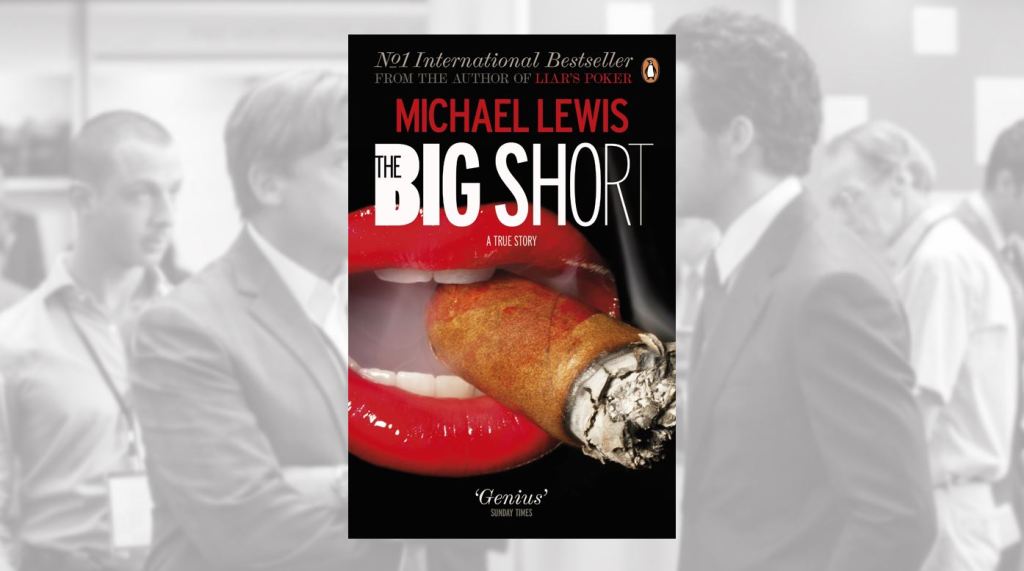
The film adaption of The Big Short was a huge success, managing to take a potentially dry story about the global financial system and turning it into a mainstream hit. Much of the reason for the film’s success if Michael Lewis’s excellently written original text which constructs a comprehensible and entertaining narrative that was able to be adapted for the screen.
I wasn’t surprised that I enjoyed the original book, especially after reading a few of Lewis’ book, but I was delighted by how digestible the content was. That said, Lewis may be a brilliant writer, but I can’t pretend anyone will be able to grasp the financial technicalities here, even just a little bit of knowledge about the industry makes the book far easier to read.
Lewis does however do a great job breaking down the deteriorating incentives which drove the creation of subprime loans and their associated derivatives, and does so with charm and simplicity. By picking out a few key characters to build the story Lewis is able to weave character development hooks into an otherwise dry financial story. This goes beyond tracking those who bet against the crisis and presenting a story of ‘winning’, Lewis delves into their personal circumstances to add social commentary and show character development.
In one case Lewis doubles Michael Burry’s journey as the tale of a fish out of water, in another Lewis contrasts the industry insider experience of Greg Lippmann with the outsiders of Cornwall Capital. Lewis is also able to use the experiences of Steve Eisman to comment on the greedy and incestuous financial system.
Lewis takes the opportunity to appropriately contextualise the crisis as well. His recollections of the birth and growth of the bond industry paint a picture of a highly opportunistic Wall Street, while his follow ups on the impacts of the crisis point to an unfair allocation of risk, where those who profited and caused the crisis were protected from its biggest impacts. Lewis sharply critiques the roles of multiple stakeholders and describes clear shared incentives which help explain the industry wide oversights, including the importance of the Ratings Agencies as well as the changing positions taken by the investment banks.
Overall The Big Short is a fun book which tells what could be a dry story through the more personable perspective of the actual participants of the crisis.
 ehhere
Leave a comment