
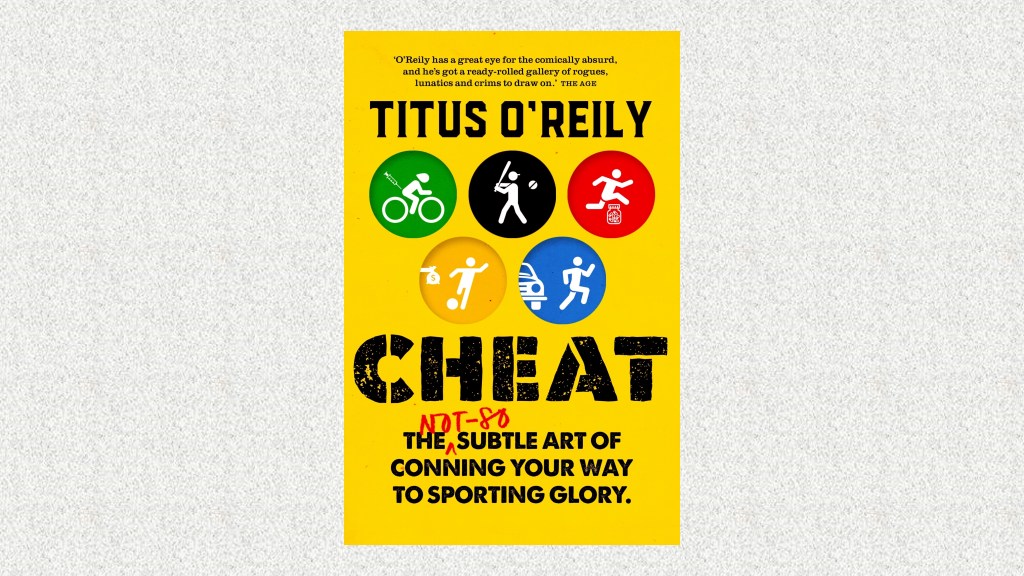
My first exposure to Titus O’Reily was his old segment on The Cheap Seats. There he would present the sport news of the week in his… unique comedic style. Even before speaking though he looked like he didn’t belong on that show.
His signature look comprised a weird hat and dated suit that was more fitting of a 1960s investigative reporter rather than a fresh news comedy show. Against a cast of young hip presenters Titus O’Reily stuck out like a middle aged sore thumb and took some getting used to.
It didn’t take long to understand why he fit though. He exuded confidence, in both his content and unique presenting style. He added an enjoyable element to show banter and very quickly won me over once I got used to his presenting cadence and comedic rhythm. Cursory glances at his online writing and social media works also served him well. I came to realise this guy is smart, and funny sport nut, so unsurprisingly pretty much the first time I came across a book of his I bought it.
Cheat became part of my pre-sleep ritual and it was perfect for the job too. Not because it bored me to bed but because it comprising short entertaining stories and was easy to pick up and put down. The stories each describe cheating scandals and organised by theme and oozing O’Reily’s comedic style. O’Reily has a great writing style, clear and concise when describing incidents and with a great sense of when to add a joke and flip the seriousness of scandal on its head.
There were a few highlights for me in this book. The St Louis Olympics chapters was an amazing exploration of early sport science cluelessness as well organisational disaster as at a time when the IOC could be pushed around. I had heard some of these stories but appreciated O’Reily bringing to light the ego and racism that ran rampant at these games, a good reminder that we’ve come a long way,
The Tour De France content was also amazing, depressingly highlighting the symbiotic relationship of drug cheating innovation with cycling and the astounding disgrace that Lance Armstrong has come to represent. It left me with more respect for cycling difficulties but less respect for the cycling industry.
I also enjoyed how the book deconstructs our perceptions of achievement. It highlighted how quickly we forget cheats and how organisational bodies are incentivised to make us forget so that their competitions are looked at with reverence, the Marseille UEFA Champions league campaign being an example here. It also highlighted commercial conflicts of interests where governing bodies are disincentivised to harm their biggest funders, such as WADA and its relationships with Governments.
Most powerfully though O’Reily clearly speaks as a sports romantic and as this book progresses the comedy is somewhat replaced by a plea to Sport as a whole to recognise the harm of cheating. O’Reily highlights the health risks athletes have been subjected to by superiors who knew better and in a passionate conclusion ties these points together.
This was a great book featuring comedy, a clear message and a lot of passion. Good fun.
 ehhere
Leave a comment