
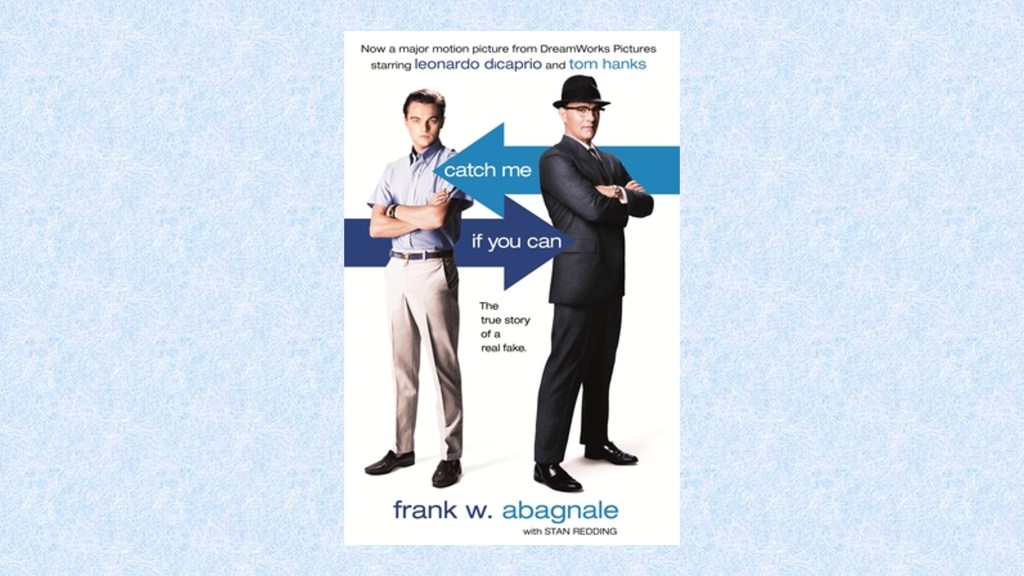
After reading a few serious fiction books with heavy moral lessons, ‘Catch Me If You Can’ proved to be a fun and necessary circuit breaker. It was an easy and enthralling read, based on the remarkable younger years of its author, Frank Abagnale.
The books starts by describing Frank’s youth, including his parent’s divorce and his father’s fall from grace. Young Frank doesn’t spend much time wallowing in sadness of a broken home though, as the story moves quickly alongside Frank’s increasingly risky and daring fraudulent activities. What starts with simple check forgery escalates into reckless identity fraud. Frank goes onto impersonate Pilots, Lawyers, Doctors and cashes in millions of bad checks in the process.
This book is based on real life events and the story is almost too neatly written. From a reader’s perspective this was great, the content was engaging and it’s clear that the writers have been selective with the parts of Frank’s life that they have included. I reckon more was left our of this book than left in. Frank hurt a lot of people on his journey and although the book touches on this, it doesn’t press the issue and generally doesn’t give much substance to the other characters. The real star of this book is Frank and reader is intended to follow his journey. I was rooting for the fraudster, gasping with every near capture, and wanting to see him climb higher up the social ladder with each page.
What they have left in though was great content, which created a rich and engaging narrative. Opening the book with his difficult childhood framed the rest of Frank’s actions sympathetically. On one hand fraud is bad, but Frank’s fraud became more purposeful because in the context of his depressing family reality it represented a constructed dream taht allowed him to escape and flourish. While he’s on the run he pretty much never contacts his family, and although he’s drawn to deeper relationships (even getting engaged under a false name) he won’t and can’t commit to anything. He needs to be on the run, not just from the authorities, but from living an authentic life and facing the issues that come with that.
Frank is inevitably caught, and his prison experience offers another important contrast to the rest of the story. The horrible French prison experience is narrative whiplash that adds great depth to the book, but also wins more sympathy points as our anti-hero faces the consequences of his actions. However just story hits its bleakest darkest points, the punishment-centric French system is replaced with another stark contrast, the reform-centric Swedish system. The Swedish experience was so idyllic and principled. Frank paints a utopian picture before showing that it is ultimately a false utopia. Frank is not reformed and soon after being given a critical reprieve he sensationally escapes and somewhat reverses the reader’s sympathy and moral hopes that he has earned while incarserated.
When reviewing the how the fruits of crime were described with so much fondness earlier in the book it further implies that Frank isn’t capable of reforming himself, however here I have to note the form of the book itself. I think the narrative conclusion say more about the writer’s objectives rather than the Frank character. Ultimately the objective of the book is to be fun and make reader enjoy the criminal journey rather than point to any moral lessons or deeply analyse a character. Frank is a real person, but you can’t honestly learn much about about him from reading this, it’s simply a fun and easy read.
What might be a little more challenging for readers though is the time setting and much of this story is incomprehensible from today’s perspective. Hand written forgery, friendly strangers and check usage are not part of the world of today. That doesn’t mean these elements are not enjoyable to read about, the luxury Pan Am was romantic and dreamlike, it was fun to read about and had me wishing for time when travel was prestigious had to be experienced for oneself, rather than commoditised for the purposes of Instagram by half of Melbourne escaping to Europe every winter. So much of our world today is online including travel, identity theft and financial fraud so in this respect the book offered another dimension of escape, because it captured a time unlike now.
I made the mistake of reading this in short bursts on the tram or before bed, but if I had my time again I would suggest the book is best consumed in one or few sittings on quiet Sunday afternoons. The story is simply remarkable and when paired with direct narration that beautifully describes the era ‘Catch Me If You Can’ proves to be an easy and immersive read.
 ehhere
Leave a comment