
Home
Before I had my driver’s licence, my friends would drive me home from Cretan dance classes. The journey would take us from East Brunswick to West Brunswick down Dawson Street and gave me the chance to annoy my friends with facts about my local area. I would point out the Brunswick Library (which used to be a theatre), the old St Ambrose Primary School (which now hosts Brazilian Drumming classes) and even Brunswick Secondary School (which moonlights as the Brunswick Hockey Club). Learning these stories satisfied my natural curiosities, but it also became a necessary way to beat the boredom of an otherwise monotonous journey.
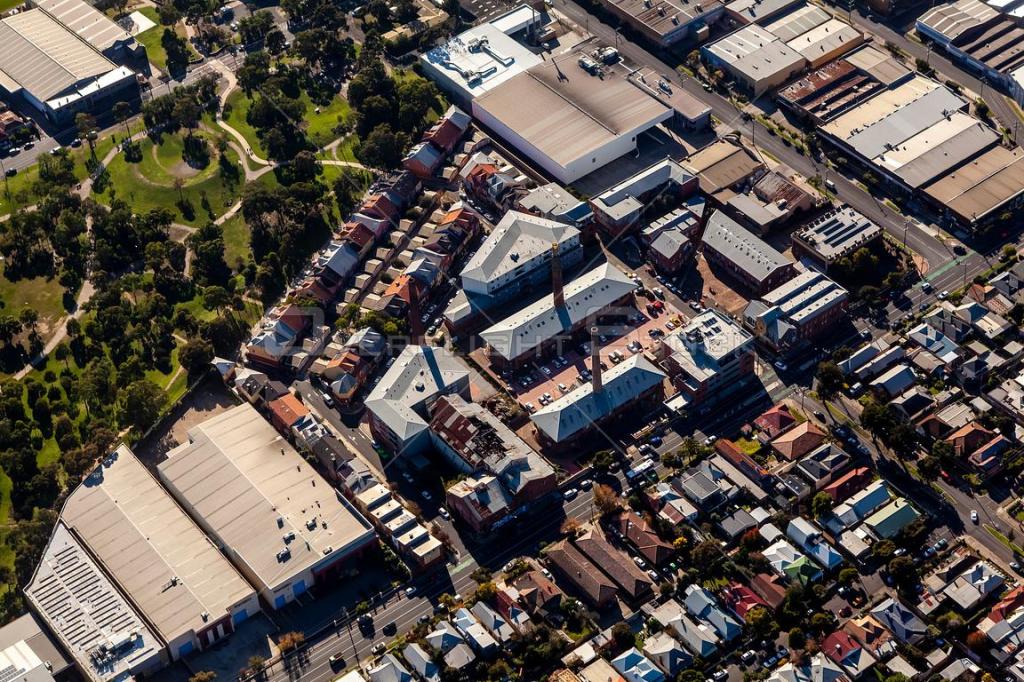
I especially liked passing by the old Brickworks, and given the time, I would usually wander off my direct path and explore them. The Brickworks used to feature working kilns and a vast quarry, but over time the kilns fell out of use and the quarry was filled as a rubbish tip. Today apartments occupy the space of the old worksites and the rubbish tip was transformed once again into a series of parks. To me it always seemed that the evolution of the Brickworks mirrored the evolution of Brunswick, which in the face of unstoppable gentrification has lost its working class character.
It is a simple story that fuels the stereotypes about the suburb, and was echoed by my parents whenever we drove past the brickworks as a family. As a lifelong resident, telling these stories felt like a way of protecting the character of my neighbourhood in the face of gentrification, yuppies and suburban tourists. That was of course until Brunswick West went into lockdown, and I was abruptly made aware of the fact real Brunswick may not be my neigbourhood afterall.
Outside
The initial targeted lockdown shook my sense of home. I could no longer drive down Dawson Street with my friends and share my collection of stories. More dishearteningly, I no longer felt entitled to tell these stories anymore. They belonged to real Brunswick, across the road, and for that exhausting moment, I was legally not welcome.
The rest of the city soon joined the forced isolation. Just as I couldn’t drive down Dawson Street any more, young professionals weren’t able to clog up the city bound trams, and uni students could no longer crowd out the Retreat Hotel. Now in our now shared adversity, I was freed of the initial targeted social stigma, and I began to wander, aimlessly and without any real purpose. I wandered for the sake of wandering, and it revealed a suburb that I didn’t recognise.
There was the concreted Moonee Ponds Creek and the dilapidated Brunswick North Primary School, but the most unrecognisable discovery was the people that I saw. They were local people. Everyone’s world became a little smaller and we started getting in each other’s way. Playing basketball at the local ring became increasingly challenging as people established new routines. Whether the basketball ring was free or not followed no discernible pattern. Random and surprising assortments of locals of all ages would come and go, competing for space to play and leading to frustration and disappointment. This inevitably led to me searching for alternatives and eventually I managed to find a free court in a better location.
In other cases we were made to feel like foreigners disturbing an existing local order. The Village Bakery and Mr Truong’s had to deal with a new larger clientele. Waiting in line soon became a necessary part of my working from home routine, but it came as a great annoyance to the few existing customers not used to waiting for their lunch. Eventually things would settle. A new local order was established and I learnt how best to live in it. There were extra staff at the lunch time eateries, we found space to exercise undisturbed and I even found a way to annoy my friends with stories. New stories revealed and shared on our walks to nowhere.
Meaning
When things reopened I slowly reverted to my old habits, but my perspectives on my home had changed. How can I call somewhere home after realising I neglect my immediate surroundings? Maybe they are so accessible we allow ourselves to put off exploring them. Maybe we necessarily need to live parts of our lives in the safety of strangers rather than neighbours. Whatever the reason, we spend a lot of time travelling somewhere else to do things we can do nearby. Although not local, those places are a kind of home too, where we find safety and can express ourselves. Even my Brunswick stories were proven to be a reflection of my own curiosities rather than an absolute narrative of the suburb. The stories changed as my environment changed because my focus was understandably applied to different things. The relationship with the neighborhood is largely functional and is by no means absolute. This fact doesn’t detract from our connections but it helps inform how we can foster connection. Living your life will lead to meaning, and changing how you live will lead to new meaning.
Walking down Dawson Street a person may pass a boring grey factory without realizing that they construct theatre sets inside… but does it matter if they know that? Maybe they are just walking down Dawson Street because they need to get from Brunswick West to Brunswick East.
 ehhere
Leave a comment